
Why Diaspora Return Matters
Why Diaspora Return Begins With Identity, Not Travel
Diaspora return begins with a question.
Not a passport.
Not a visa.
Not a plane ticket.
A question.
Instead, it begins with a deeper question: Who am I?
Many people living far from their ancestral homeland, diaspora return is not simply a physical journey. It is a search for identity, belonging, and connection to a place that has shaped them across generations.
Diaspora Return and the Search for Belonging
For others, the answer is less clear.
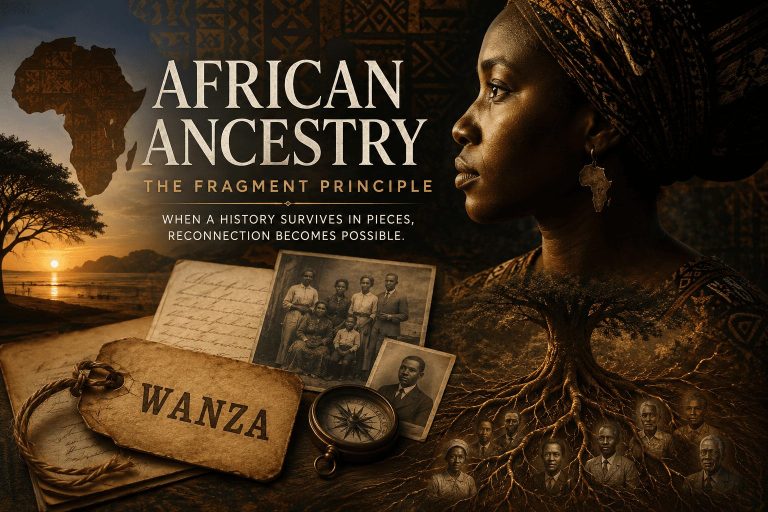
I spent years searching for pieces of a story I could not fully see.
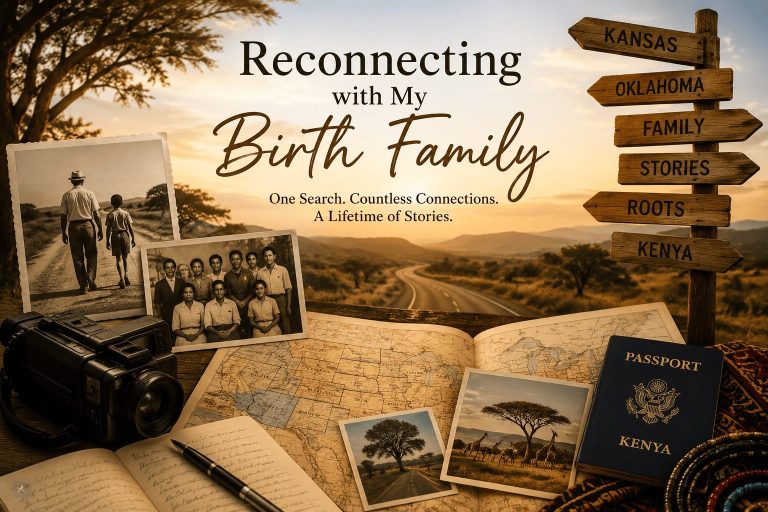
Adopted at birth and raised in America, I grew up with questions that many people never have to ask. Questions about ancestry. Questions about belonging. Questions about identity.
The search eventually led beyond family records and personal history. It led to a larger realization: identity is not simply inherited. It is discovered, recovered, and continuously shaped.
That realization is not unique to me.
Across the world, millions of people of African descent are asking similar questions.
Learn more about the African diaspora here.
Some are researching family histories. Some are visiting ancestral homelands. Some are pursuing citizenship pathways. Others are exploring culture, language, genealogy, and community.
Different journeys.
Similar questions.
What connects them is a growing desire for return.
Yet return is one of the most misunderstood ideas in modern discussions about the African diaspora.
Most people assume return means relocation. For example, many imagine moving from one country to another or crossing oceans and borders in search of connection.
But return begins much earlier than that.
Return begins when someone decides that understanding their story matters.
Why Diaspora Return Matters Across Generations
Something significant is happening across the African diaspora.
People are reconnecting.
Researchers are uncovering histories that were once difficult to access.
People are reconnecting.
At the same time, researchers are uncovering histories that were once difficult to access.
Meanwhile, families are tracing ancestral connections.
Across the diaspora, artists are preserving cultural memory.
In addition, entrepreneurs are building bridges between continents.
Furthermore, communities are creating new pathways for engagement between Africa and its global diaspora.
Technology has accelerated this process. As a result, information that once required years of searching can now be discovered in months. Furthermore, conversations that once seemed impossible now happen every day across countries and continents.
What we are witnessing is not merely a travel trend.
Ultimately, it is a search for relationship. In addition, it is a search for context and belonging. Perhaps most importantly, however, it is a search for contribution.
The Problem With How Diaspora Return Is Usually Discussed
Most conversations about return focus on movement.
Move here.
Visit there.
Relocate.
Invest.
Travel.
While these actions can be meaningful, they often miss the deeper point.
Return is not primarily about geography.
It is about connection.
A person can relocate without ever truly returning.
A person can remain where they are and begin returning tomorrow.
Return is not measured by distance traveled.
It is measured by relationship restored.
When we reduce return to relocation, we misunderstand its purpose.
The purpose of return is not simply to arrive somewhere. Rather, its deeper purpose is to reconnect.
The Five Dimensions of Diaspora Return
At Wanzia, return is understood as a process rather than an event.
It unfolds across five interconnected dimensions.
1. Return to Identity
Every return journey begins with identity.
Many individuals seek answers to questions about ancestry, family history, heritage, and personal narrative. However, identity is not simply a label. Instead, it serves as a framework for understanding oneself in relation to history, community, and future possibility.
Before people return anywhere else, they often return to themselves.
2. Return to Memory
Memory connects generations.
Family stories preserve connection.
Historical records provide evidence.
Meanwhile, oral traditions carry wisdom across generations.
In addition, cultural knowledge helps communities maintain identity.
Memory transforms isolated individuals into participants within a larger human story.
Without memory, identity becomes fragile.
With memory, identity gains depth.
3. Return to Culture
Culture carries values, traditions, language, art, music, food, and worldview.
Culture cannot be fully preserved in museums or archives.
It survives through participation.
Cultural return is not about perfection.
It is about engagement.
It is the decision to learn, contribute, and reconnect.
4. Return to Contribution
One of the greatest misunderstandings about return is the belief that it is primarily about receiving.
In reality, meaningful return involves contribution.
People contribute in many ways, including entrepreneurship, education, research, storytelling, community building, investment, and creative work.
Every person possesses skills, knowledge, and experiences that can create value.
Return becomes powerful when connection is matched by contribution.
5. Return to Belonging
At its deepest level, return is a search for belonging.
People want to know they matter.
They want to know their story has meaning.
They want to know their presence contributes to something larger than themselves.
Belonging does not require uniformity.
It does not erase differences.
It creates space for connection despite them.
Belonging is not the end of return.
It is its foundation.
Return and the Future
Many people view return as an attempt to recover the past.
That is only partially true.
The past matters because it provides context.
But return is ultimately concerned with the future.
The goal is not to recreate previous generations.
The goal is to build upon what they left behind.
The African diaspora possesses extraordinary talent, knowledge, creativity, and experience.
Africa possesses extraordinary opportunity, energy, culture, and potential.
The future will be shaped by how effectively these relationships evolve.
Not through nostalgia.
Nor through romanticism.
Instead, through collaboration.
Equally important, through contribution.
Ultimately, through shared purpose.
A Shared Responsibility
Every generation inherits unfinished work.
The generations before us preserved stories, traditions, knowledge, and possibilities under circumstances that were often extraordinarily difficult.
Our responsibility is different.
We must decide whether memory becomes wisdom.
Whether identity becomes confidence.
Whether heritage becomes contribution.
Whether connection grows into community.
And whether return becomes a foundation for building.
The Question Before Us
The question facing the African diaspora is not whether history can be changed.
It cannot.
Instead, the real question is whether history can be understood. Equally important is whether identity can become a source of strength rather than confusion. Furthermore, can connection become collaboration? Finally, can belonging become contribution?
Return is not ultimately about going backward.
Return is about carrying memory forward.
The future will not be built by people who forget where they came from.
It will be built by people who understand their story well enough to help write the next chapter.
Begin Your Return Journey
Every journey of diaspora return starts with a question.
What does return mean to you?
Whether you’re exploring ancestry, culture, or identity, the first step is simply to begin. After all, every journey starts with a single question.
Share your thoughts in the comments below.